Secular writers often pit science against religion. Religious writers sometimes paint modern universities as fiercely hostile to any religious belief.
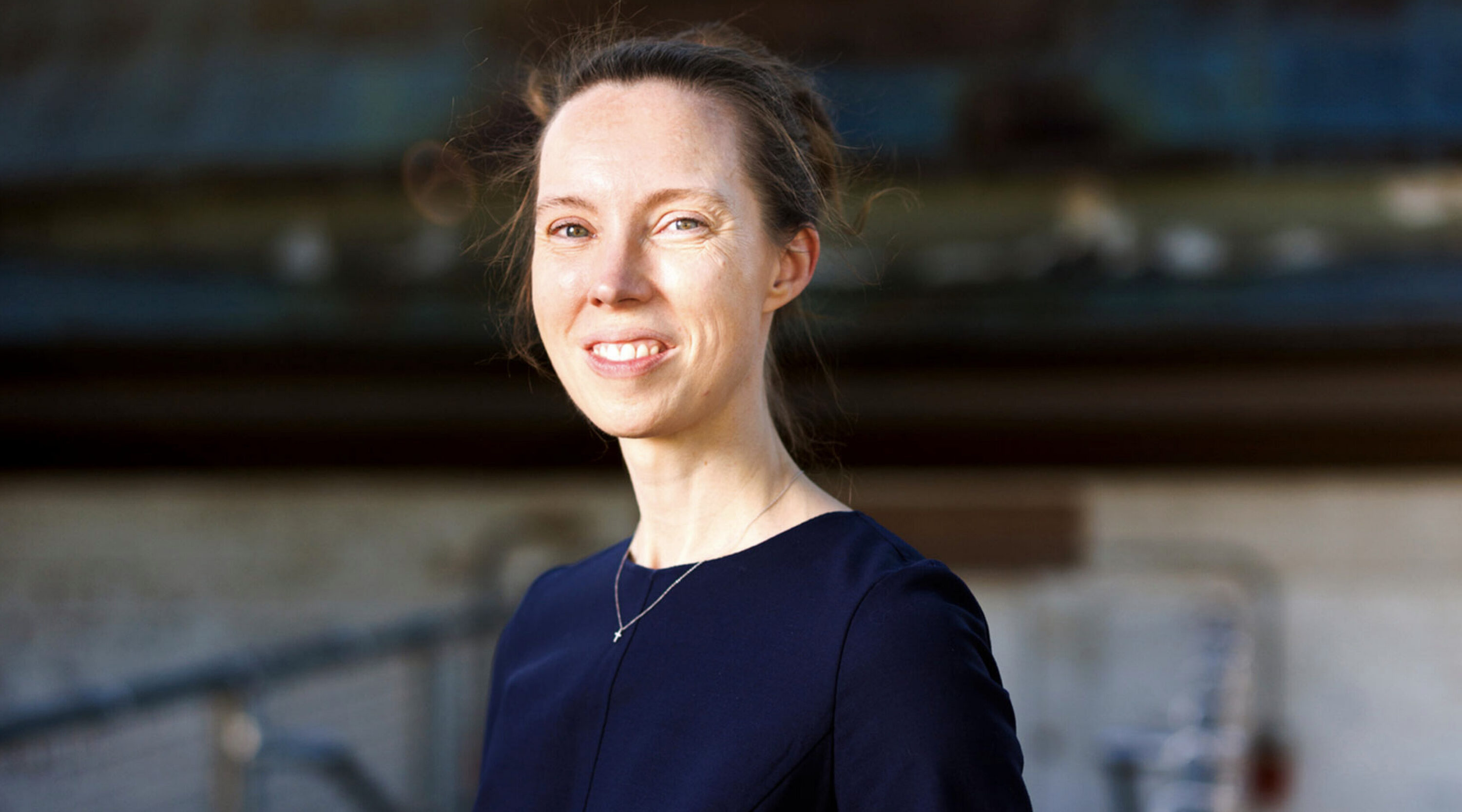
Harvard University professor Karin Öberg, a friend of the Dominican Friars, disproves both of these simplistic narratives.
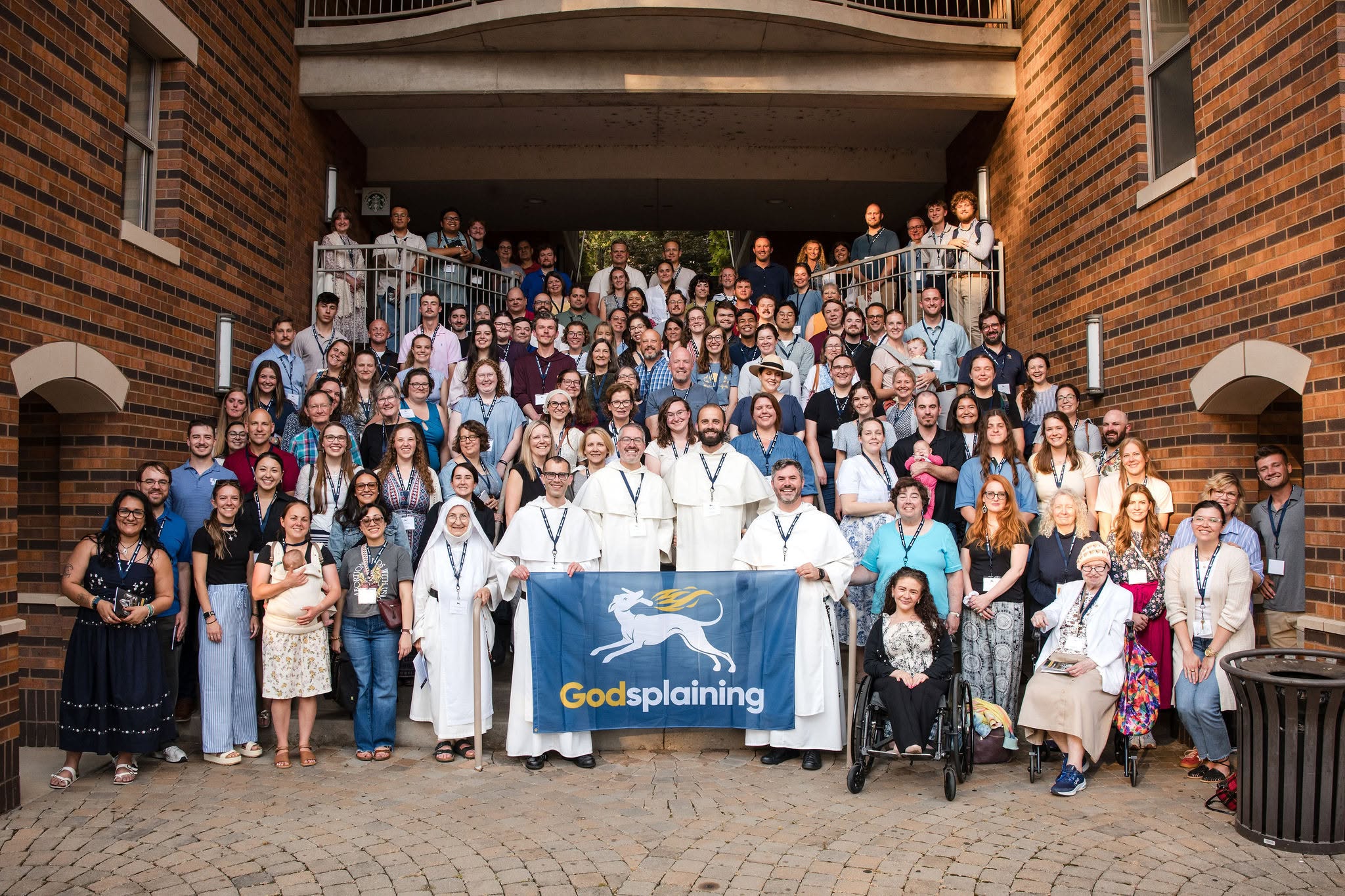
Öberg is an internationally recognized astrochemist known for her work studying the origins of life. She got her PhD in 2009 and has been a professor of astronomy at Harvard since 2013, but it was at her previous position, at the University of Virginia—where the Dominicans lead a university parish—that she found her “very strong connection” with the Order.
That chapter is one of the later ones in her faith journey, though.
Öberg grew up in a non-religious household in largely secular Sweden. Even though she was baptized in the Church of Sweden, she did not really profess Christian doctrine—but she believed in God’s existence and in moral goodness.
In college, already on the road to scientific success, she began to struggle with the conflict between materialism and her belief in moral realism and free will.
“Becoming more conscious about that is what started the journey back into faith, or into more mature faith, in my early 20s,” she explained.
As is the case with many intellectuals, it was through reading that Öberg found Christianity. C.S. Lewis’ writings helped convert her to Christianity.
At first, she started attending an Anglican church near where she was studying in the Netherlands. Then, her brother—a non-believer—gave her a copy of G.K. Chesterton’s Orthodoxy, which got her looking seriously into the Catholic faith.
Thinking fearlessly
Directly after her conversion to Catholicism in 2012, Professor Öberg worked in her first faculty position at the University of Virginia, in Charlottesville, where the Dominicans care for St. Thomas Aquinas University Parish.
“I felt a very strong connection with the [Dominicans] immediately,” Öberg recalled. She was also already connected with the Dominicans without realizing it. “I had chosen St. Catherine of Siena as my patron saint, without realizing that she was a Dominican. So I’m not sure if I chose the Dominicans, or if the Dominicans chose me.”
The Dominicans shared her zeal for the intellectual life.
“I think what initially attracted me was this combination of deep respect for the intellectual gifts, and for using your mind in a sort of fearless way, with a spiritual fearlessness,” she reflected.
And the parish’s namesake, St. Thomas Aquinas, appealed to her deeply.
“I discovered Aquinas. It is impossible to not fall in love with Aquinas,” Öberg recalled. “At the University of Virginia, I found a model for how to use my intellectual gifts within the spiritual life, how to engage with a tradition in this sort of deep and beautiful way.”
Astronomy and spirituality
That spirit of fearless, rigorous thinking has made Öberg’s work meld with her faith, even giving a new joy to her studies.
“To be able to see new things about the cosmos, to sort of lift the veil and to understand a little bit better why the cosmos works the way it does—it’s a very joyful thing,” she said.
As an astronomer, she says she understands why Aquinas and the Psalmists use astronomical images, noting how space is the “greatest thing that we can see” and thus a “natural thing to be curious about.”
“That’s why the Psalmist and St. Thomas Aquinas often use astronomical objects as examples,” she said. “In the grandeur of creation, these are the biggest things we can grasp naturally.”
Handing on the Fruits of Contemplation
The Dominican Friars live by the motto, “To contemplate and hand on the fruits of contemplation.”
Öberg also lives by this motto, handing on to others the gifts she has received.
For one, she’s a monthly donor to the Dominican Friars.
She also teaches a seminar on Catholicism to first-year students at Harvard. “I think for them it is just so important that they feel like they don’t have to put their intellectual curiosity to one side when they are engaging with their faith,” she said.
Of course, she sends them to the Dominican Friars.
“I point them to Aquinas 101 all the time,” she said, referring to the Thomistic Institute’s online introduction to the thought of St. Thomas Aquinas. “I think that is just such an easy way to start.”