Healing in Purgatory
Br. Cyril Stola, O.P.
We’re called to become saints. The Father desires that we be united in friendship with him in this life in order that we might forever dwell with him in heaven. The heavenly union with God is a perfect union that can begin on Earth, but it can also be inhibited by sin. Since it acts against this union, sin is the greatest evil of all. In the words of the Catechism, “nothing has worse consequences for sinners themselves, for the Church, and for the whole world” than sin (CCC 1488). When we sin, we cloud our consciences, build vices, and harden our hearts. Sin hurts our relationships with each other and with God. God’s mercy blots out our sins, but it does not automatically fix the ways in which sin warps us.
Over time, growth in grace and virtue can put our inner selves back into order. Throughout the course of life, the Holy Spirit takes repentant sinners and makes them radiant with divine life and estranges them from sin and vice. He especially effects this through prayer, the sacraments, and redemptive suffering. This process is one of purification. Those who fully embrace the Spirit’s actions live with hearts that seek God alone, and they immediately enter heaven when they die. Not all who revere God, however, come to such a point in life. Their time runs out before they’re fit for the heavenly union; they are united with God, but imperfectly so. Hope is not lost, however. In his mercy, God gives us an intermediate state between heaven and Earth where he purges away the sins and impurities that still inhibit our union with him. He gives us purgatory.
In purgatory, God puts men and women face to face with their sins. There, they fully understand how they acted against God, and they cannot grasp for any distraction or rationalization in facing even the smallest things that still separate them from God. Saint John Henry Newman puts this reckoning in stark terms in “The Dream of Gerontius.” In the poem, a guardian angel addresses his charge, an old man who just died a holy death with his sins absolved:
And thou wilt hate and loathe thyself; for, though now sinless, thou wilt feel that thou hast sinn’d, as never thou didst feel.
His state now allows him to see his past sins on a spiritual level; he hates that he committed such acts. This is a painful realization because sin is a painful reality. If we could see sin as it truly is—an offence against God—we would never sin. Purgation is like physical therapy after surgery, it’s painful but ultimately it heals. God reveals sin in order to remove all traces of it and to bind up our injured souls.
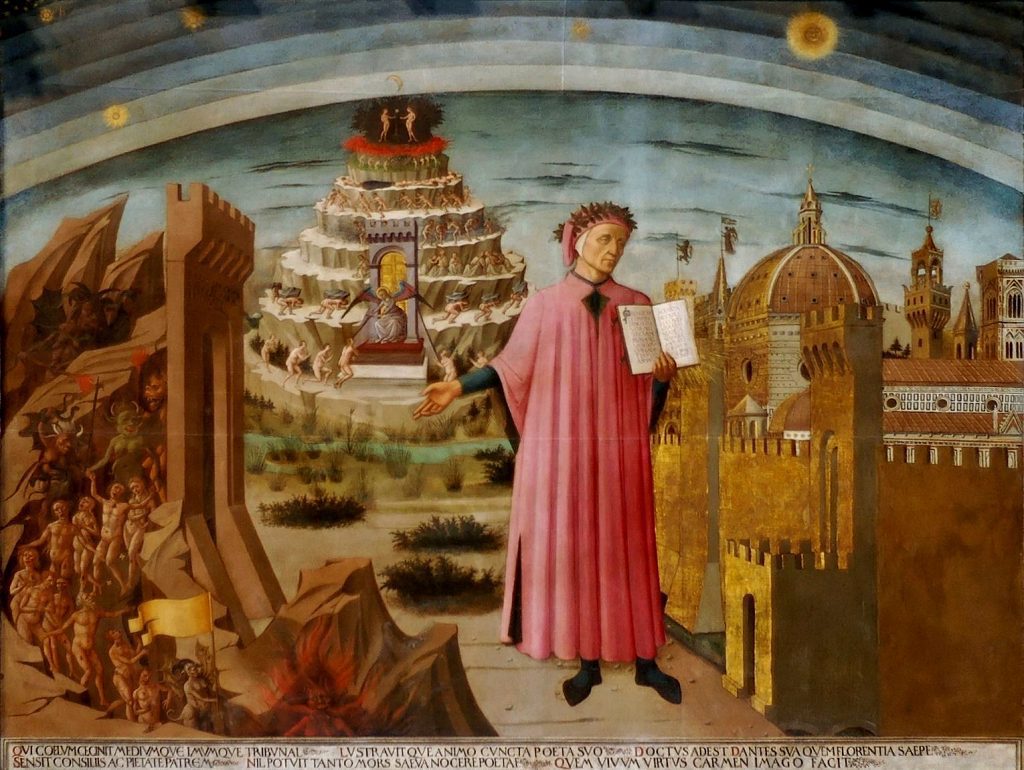
Dante expresses the healing of purgatory beautifully at the end of the “Purgatorio”—the second part of his Divine Comedy. There, Beatrice chastises Dante for abandoning the love he had for her and God and for choosing to obsess over futile things instead. Faced with the shame and gravity of his sins, he weeps and then gets plunged into the waters of the Lethe. The Lethe, according to Greek mythology, makes one forget the whole of life. Dante, however, adapts this river to suit his higher vision. His Lethe makes one forget his sins and the warped mentality they gave him in life; it restores lost innocence and heals interior wounds. It makes a person like a little child, ready to enter the kingdom of heaven.
That purgatory purifies, heals, and brings souls to holiness is a great mercy and a source of hope. Even men and women who have struggled with sin all their lives, but not yet reached “sainthood” in this life, can be made perfect after death and thereafter dwell with God. Let us thank God for the gift of purgatory and pray for those who dwell there, that God’s work in them may be complete.
✠