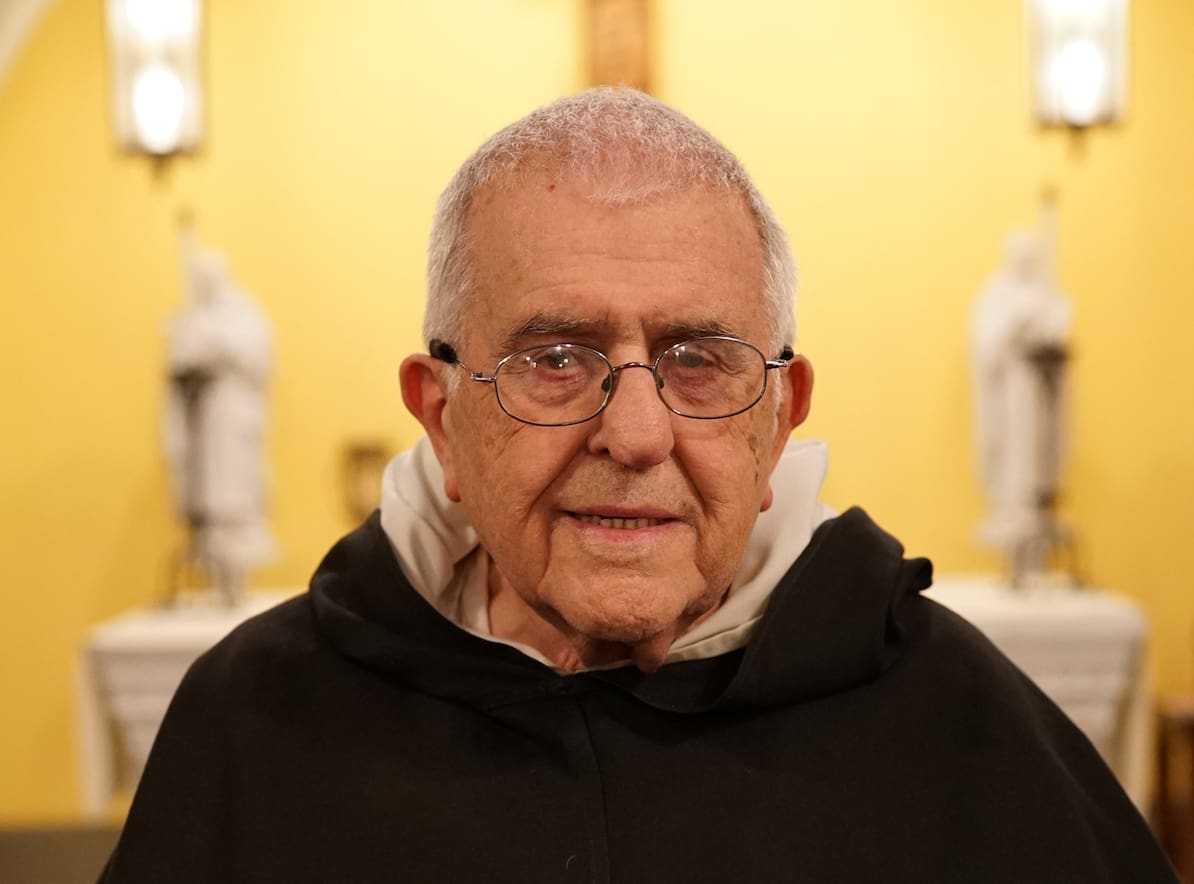
Fr. Basil Cole, O.P., professor emeritus at the Dominican House of Studies and author of Angelic Virtues and Demonic Vices: Aquinas’s Practical Principles for Reaching Heaven and Avoiding Hell.
Growing in Virtue
By Br. Jerome Masters, O.P.
In his recent book, Angelic Virtues and Demonic Vices: Aquinas’s Practical Principles for Reaching Heaven and Avoiding Hell, Fr. Basil Cole, O.P., sets out to make the teachings of St. Thomas Aquinas accessible to anyone. Fr. Basil wrote an earlier book for priests called The Hidden Enemies of the Priesthood: The Contributions of St. Thomas Aquinas. In this new book, Fr. Basil seeks to take the lessons from his earlier book and make them accessible to those who are not priests—the thought being that more people need to know about this than just priests.
The book is divided into two parts. The first goes through the demonic vices, and the second through the angelic virtues. “In order to battle against vice and cultivate virtue, it is essential to understand the final goal of man’s existence,” Fr. Basil says in the introduction to the book. In other words, we need to understand that heaven is our ultimate goal, and by knowing that goal we can cultivate the virtues we need to get there.
In the first part of the book, Fr. Basil explains the vices that we face in this life. These are the capital vices with one “Queen” of them all. Namely: Pride as queen, Lust, Vainglory, Avarice, Envy, Anger, and Gluttony. He first explains what each vice is by providing quotes from Scripture, offering what St. Thomas has to say about it in some of his most famous works (mainly the Summa Theologiae), and explaining what St. Thomas means in the text provided. Fr. Basil ends each chapter with clear examples of how different people such as priests, nuns, and laymen might exhibit these different vices in their lives. He explains how these vices tie into one another and truly make one a slave to sin if there is no fight to cultivate virtue. This section can help us come to an understanding of the spiritual life, because one is coming to understand the enemies that are fought in the spiritual life.
In the second half of the book, Fr. Basil explores the virtues we need to cultivate in order to fight these vices and ends with the necessity for prayer. The virtues give us the strength to fight these vices in order to attain our final goal, heaven. Fr. Basil demonstrates how, when we cultivate virtues, we can live happy lives. He considers what St. Thomas Aquinas and other spiritual masters of the Church say about the virtues and how they can be lived out by everyone. There are also helpful practical tips on how to cultivate the virtues throughout this section of the book.
One theme that recurs throughout the entire book is that everything begins with God and not ourselves. Fr. Basil reminds us that in order to fight the queen vice of pride we need to humble ourselves and remind ourselves that everything good in our lives comes from the one who is goodness itself. Therefore, it is only by God’s grace that we can grow in virtue. The only thing we can do on our own apart from God’s help is cultivate the vices! Praying to God for growth in virtue and cooperating with his grace every day is the way for us to begin and continue to grow in virtue throughout our lives toward virtue’s goal — God himself.
The Dominican friars are called to preach the Gospel in every age and in every place it is needed. Through preaching, teaching, pastoral ministry, and the formation of new friars, they work to bring the truth of Christ to a world searching for meaning and hope.
Reflections like this one are made possible because of the faithful support of friends like you. Your generosity helps sustain the friars in their mission to proclaim the Gospel, serve the Church, and form future preachers of the faith.
Support the preaching mission of the Dominican friars and help ensure that the light of the Gospel continues to reach hearts for generations to come.